Bassano del Grappa · Veneto

On the Bridge
of Bassano

A wooden walkway suspended over the Brenta that, for eight centuries, has told the story of a town, its river, and the mountains watching from above.

The bridge

An eight-century-old wooden artefact, rebuilt identically every time it falls

The bridge of Bassano — known to Italians as Ponte degli Alpini — is one of the most celebrated covered timber bridges in the world. Designed by Andrea Palladio in 1569, it has been destroyed by floods, fires and a wartime explosion. It has been faithfully rebuilt every time, always to the same Renaissance design.

It crosses the Brenta on five spans of larch wood, supported by four pile-cluster piers angled into the current. Palladio designed it as a wooden structure on purpose — a stone bridge, he argued, would be swept away by the powerful Alpine river. A wooden one would bend without breaking. Four and a half centuries of evidence have proved him right.

Today's bridge was rebuilt in 1948 by Italy's Alpine corps (Alpini), after Italian partisans blew it up in February 1945 to halt the German retreat. The funds came from a nationwide subscription by the Alpine veterans' association. Since then the bridge has been their property and their symbol — and the song "Sul ponte di Bassano" is the unofficial anthem of the corps.

"Made entirely of wood — for it belongs to the art to preserve the character of the work, even when the material might be otherwise." — Andrea Palladio, on his Bassano project, 1569
1569Palladio's
design
5Larch-wood
spans
8Rebuilds since
the 13th century
1948Restored by the
Italian Alpini
The town

Bassano del Grappa

A town of 43,000 people on the edge of the Venetian plain, cut in two by the Brenta — and built around four things: ceramics, grappa, white asparagus, and the Alpine memory.

Bassano is industrious and beautiful at once. Piazza Libertà and Piazza Garibaldi form the main public space, dominated by the 13th-century civic tower and the loggia of the Monte di Pietà. The Museo Civico holds the world's most important collection of paintings by Jacopo Bassano (the founder of a Venetian dynasty of painters) and his sons.

At the eastern entrance of the bridge stands the Nardini distillery, in continuous operation since 1779 — the oldest in Italy. At the western end, Palazzo Sturm houses the Ceramics Museum and the Remondini Print Museum: the Remondini family invented popular European printing here in the 18th century.

Bassano became a national symbol of the First World War: the Monte Grappa, the isolated Pre-Alpine massif visible from the town's main square, was the front line that stopped the Austro-Hungarian advance after Caporetto.
Don't miss

Museo Civico

The world's largest collection of works by Jacopo dal Ponte.

Since 1779

Nardini

Italy's oldest distillery — at the foot of the bridge.

18th c.

Palazzo Sturm

Ceramics & Remondini print museums, overlooking the Brenta.

DOP

White asparagus

Grown on the alluvial terraces of the Brenta — a local icon.

The three great houses

Grappa — the spirit of Bassano

When Italians say "grappa", they think of Bassano. Three high interpretations of the same craft are based here: the historic industry of Nardini, the culture and museum of Poli, and the extreme artisanship of Capovilla.

Since 1779

Nardini

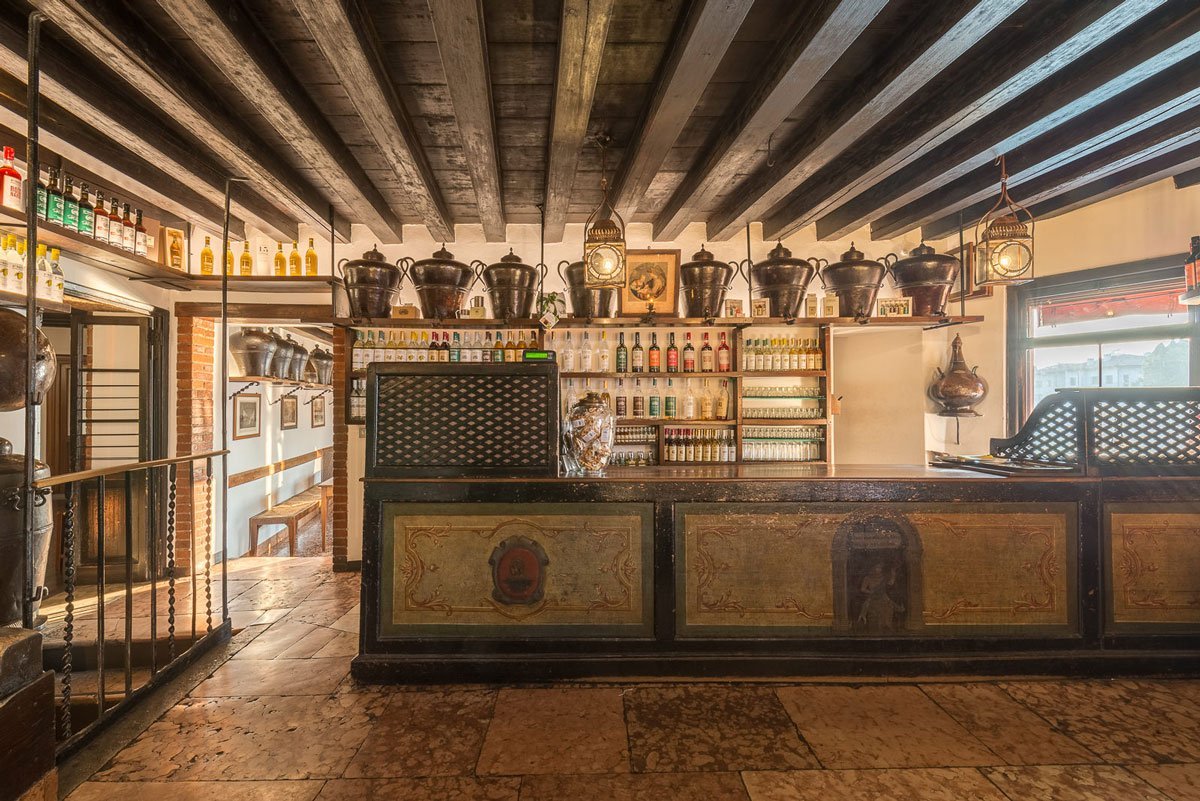
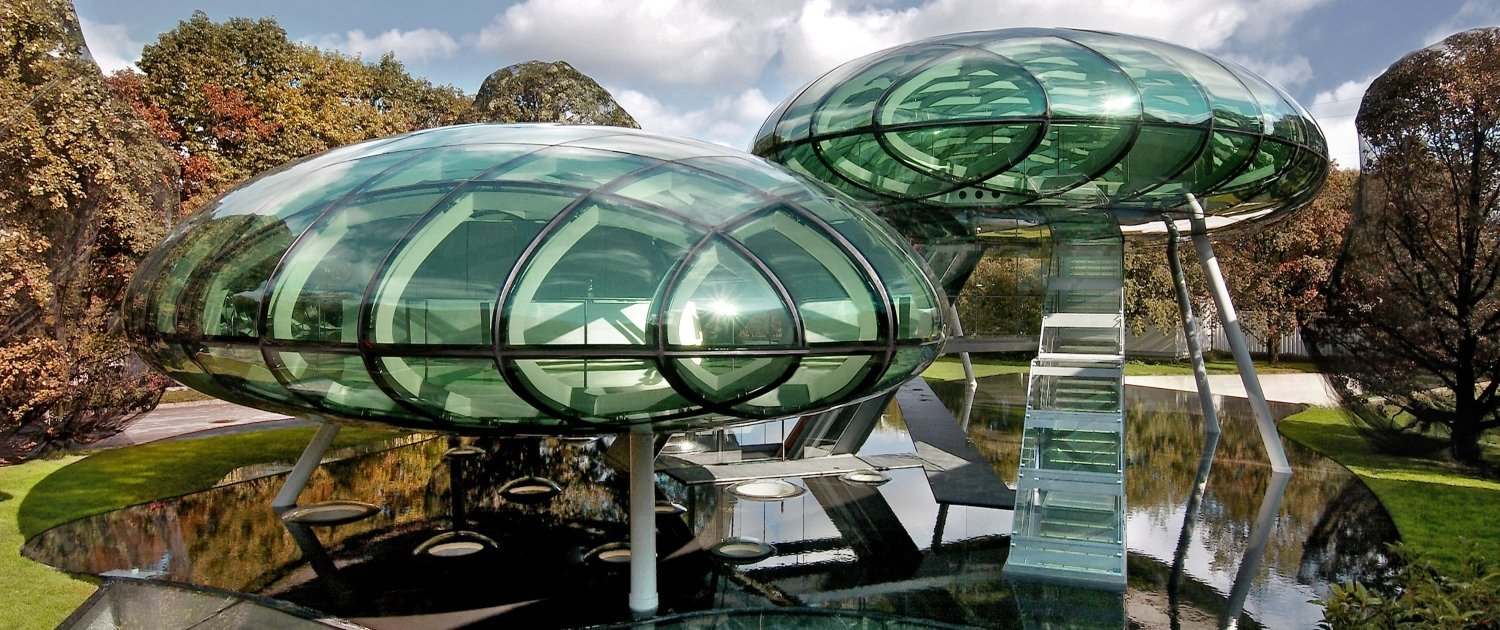
Italy's oldest distillery, founded by Bortolo Nardini at the head of the bridge. Its historic Grapperia is the town's living room; its contemporary face is "Le Bolle", the suspended glass spheres designed by Massimiliano Fuksas (2004). nardini.it

Since 1898 · 2 sites

Poli

The Poli family and its Grappa Museum, free to enter, in two locations: Bassano (Via Gamba 6, facing the Old Bridge) and Schiavon (Via Marconi 46, beside the historic distillery). poligrappa.com

Rosà

Capovilla

In nearby Rosà, Vittorio Capovilla is regarded as one of the world's greatest fruit distillers: over 60 pure distillates from organic farming — collectible bottles. capovilladistillati.it

The historic Grapperia Nardini at the Old Bridge
The Grapperia Nardini, at the head of the bridge.
Le Bolle by Massimiliano Fuksas for Nardini
"Le Bolle" by Massimiliano Fuksas.
Capovilla distillery at Villa Dolfin Boldù, Rosà
Capovilla, in the cellars of Villa Dolfin Boldù, Rosà.
The landscape

Between the plain and the Dolomites — a threshold

Bassano is the edge of the Alps: the last step before the mountains, the first breath of the plain. Everything here turns around this physical boundary.

Hills & wine

The Pedemontana

The strip of foothills running along the southern edge of the Venetian Pre-Alps. Wine country (Vespaiolo, Torcolato), Palladian villas, walled medieval towns like Marostica (famous for its living-chess game) and Asolo.

1,775 m

Monte Grappa

The isolated limestone massif north of town. WWI's holiest Italian battlefield — over 35,000 dead — and now a UNESCO Biosphere Reserve, with the monumental ossuary of Cima Grappa on top.

180 km

Brenta Cycle Path

One of northern Italy's finest long-distance cycle routes, from Trento to the Adriatic via the Valsugana, the Brenta gorge and Bassano. Flat, on old railway and river-bank tracks. Bassano sits at the half-way point.

14th c.

Valstagna Stairs

The "Calà del Sasso": 4,444 steps carved into the cliffs of the Brenta gorge in 1389 by the Cimbri of the Sette Comuni, to bring timber down to the river. The longest monumental staircase in Italy.

Gorge

Canale di Brenta

The 35-km gorge cut by the river between the Grappa massif and the Asiago plateau. Villages hang from the walls; the ride or hike from Bassano to Primolano is one of the most spectacular landscapes of the Veneto.

UNESCO

Sette Comuni & Cimbri

The Asiago plateau, with its medieval German-speaking community (Cimbri), Asiago DOP cheese, the Astrophysical Observatory of Cima Ekar, and the second great WWI military memorial in the region.

The great timber road

From Valstagna to Venice, on zattere

For five centuries, the Brenta was the Republic of Venice's main timber highway. Logs cut in the Cadore, Cansiglio and Sette Comuni forests floated downriver, lashed into rafts, to the Venetian Arsenal — Europe's largest industrial complex.

The Arsenal — capable of launching a war galley a day — depended on a logistical system that began here, where the mountains meet the water. The menadàs, the raftsmen, set out from Valstagna and Bassano and reached the lagoon in three days. They walked back on foot.

The Stairs of Valstagna — 4,444 steps cut by pickaxe into the limestone cliffs — are the monument of that civilisation: steep, endless, made to bring timber down, not people up.

The Zattere district in Venice still carries the name of those log rafts.

From the 16th century to today

Still building in wood, here

Palladio's bridge is not a relic — it is living evidence that wood, in the right hands, is the most modern building material there is. HM52 stands in that tradition, with a contemporary practice in timber construction.

Architecture studio, construction firm, KlimaHaus and Passivhaus consultancy: HM52 designs and builds timber-structured buildings, ecological homes, modular off-site hotels and bespoke interiors — forty kilometres from Palladio's bridge, on the same river road that has been bringing larch down from the Cadore for eight centuries.

HM52 workshop · Construction firm — HM52 project · Architecture studio
Plan your visit

Getting here, parking, what to see

Bassano is an hour from Venice, thirty minutes from Vicenza and ten from the A31 motorway. The centre is small and best explored on foot: leave the car in one of the ring car parks and walk in.

By car

A31 motorway

"Bassano del Grappa" exit of the A31 "Valdastico". Ten minutes from the exit to the centre. Leave the car at the ring car parks (Le Piazze, Il Ponte, Il Prato) — the centre has camera-controlled limited-traffic zones.

By train

Venice–Trento line

One hour from Venice S. Lucia, 50 min from Padua, 35 from Vicenza. The station is a 10-minute walk from the bridge.

By bike

Valsugana cycle path

Bassano is the mid-point of the Trento–Venice route along the Brenta — flat, on riverbank and former-railway tracks.

Museums

Opening hours

Museo Civico & Palazzo Sturm: daily 10–19, closed Tuesdays. Poli Grappa Museum: free entry, daily. Always check official sites before travelling.

Info

Tourist office (IAT)

Piazza Garibaldi 34 · +39 0424 519917 · maps, tickets and tower bookings.

Summer

Operaestate Festival

From late June to mid-September: dance, theatre and music across town and the foothills, with concerts on the Old Bridge. operaestate.it